

Living near the coast offers a distinctive residential experience, with refreshing surroundings, natural light and opportunities for open, spacious home layouts. However, homeowners planning interiors in coastal neighbourhoods such as Panaiyur, Chennai, should consider how humidity, salt-laden air and seasonal weather conditions may affect interior materials and fittings.
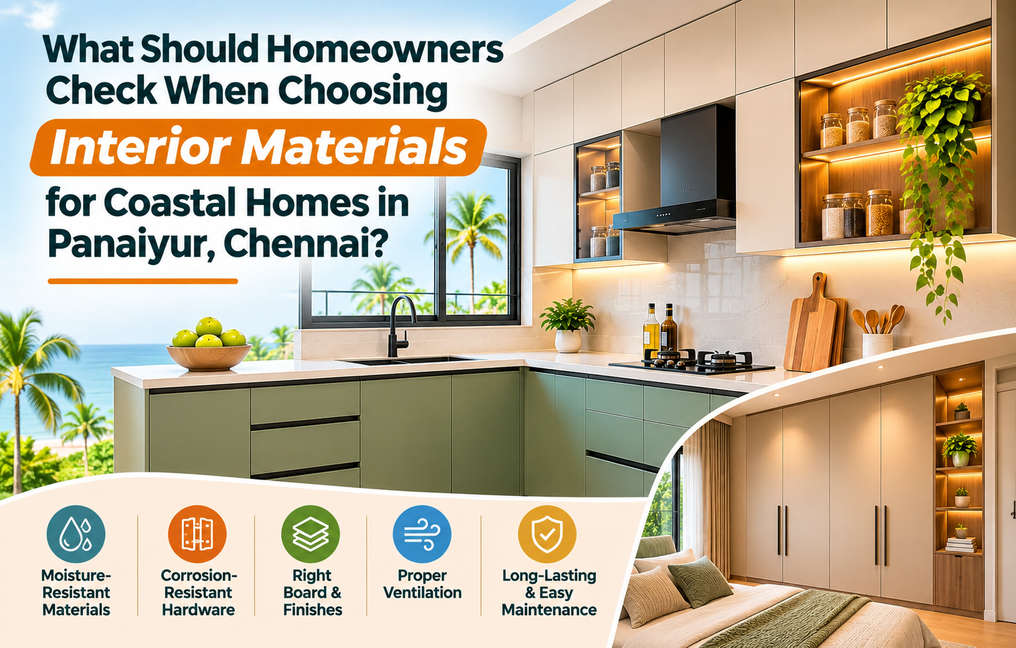
Living near the coast offers a distinctive residential experience, with refreshing surroundings, natural light and opportunities for open, spacious home layouts. However, homeowners planning interiors in coastal neighbourhoods such as Panaiyur, Chennai, should consider how humidity, salt-laden air and seasonal weather conditions may affect interior materials and fittings.
Whether you are designing a new villa, furnishing a 2BHK apartment or renovating an independent house along East Coast Road (ECR), selecting suitable materials is an important part of creating interiors that are attractive, practical and easier to maintain.
From modular kitchen cabinets and bedroom wardrobes to decorative wall panels and furniture hardware, every material choice should consider the home's environment and everyday usage.
Here are the important factors homeowners should evaluate before finalising interior materials for a coastal home in Panaiyur.
Homes in coastal locations may experience elevated humidity and exposure to salt-laden air, depending on their distance from the shoreline, ventilation and building conditions.
These factors can influence the performance of certain interior materials over time.
For example, poorly protected wood-based boards may absorb moisture, while unsuitable metal fittings may become vulnerable to corrosion.
Before selecting interior finishes, homeowners should consider:
The property's proximity and exposure to the coast
Indoor humidity and ventilation conditions
Areas exposed to water or condensation
Existing wall dampness or seepage
Frequency of cleaning and maintenance
Understanding these conditions helps homeowners make informed decisions about cabinetry, hardware and surface finishes.
The kitchen is one of the most frequently used spaces in a home. It is also exposed to water, steam, heat and regular cleaning.
For modular kitchens in Panaiyur, homeowners should discuss the suitability of moisture-resistant cabinet materials with their interior designer.
Options may include appropriately specified boiling-water-resistant plywood and other boards designed for the intended application.
However, material labels alone do not guarantee protection against prolonged water exposure.
The overall cabinet construction, edge sealing, installation quality and plumbing condition also influence performance.
Pay particular attention to sink cabinets, dishwasher areas and cabinets located close to water connections.
Choosing suitable materials and ensuring proper installation can help reduce avoidable moisture-related damage.
Bedroom wardrobes are commonly installed against walls, sometimes extending from floor to ceiling.
In coastal homes, it is important to inspect the wall condition before installing large wardrobes.
Check for damp patches, peeling paint, mould or signs of water seepage.
Any underlying moisture problem should be investigated and resolved before cabinetry is installed.
When planning wardrobes, discuss appropriate board materials, surface finishes, edge protection and ventilation arrangements.
For bedrooms with limited floor space, sliding wardrobes or customised floor-to-ceiling storage may be suitable.
However, the wardrobe design should not conceal unresolved dampness or prevent access to areas requiring inspection.
Cabinet hardware is an important part of interior design, but it is sometimes overlooked during material selection.
Hinges, drawer channels, handles, screws and other metal components are used regularly and may be affected by humid or salt-laden environments.
Homeowners should discuss suitable corrosion-resistant hardware options with their interior designer.
Consider the quality and specification of:
Cabinet hinges
Drawer channels
Wardrobe handles
Sliding door mechanisms
Screws and fasteners
Kitchen storage accessories
Ask about manufacturer recommendations, warranty coverage and maintenance requirements.
The right hardware specification depends on the installation location and expected exposure conditions.
Decorative wall panels can add character to living rooms, bedrooms and dining spaces.
Popular options include fluted panels, laminates, textured surfaces and customised TV unit backdrops.
However, the suitability of these finishes should be evaluated before installation in coastal homes.
Walls should be inspected for moisture, cracks and surface damage.
Avoid covering damp walls with decorative panels before identifying and correcting the underlying cause.
Homeowners should also consider cleaning requirements, surface durability and the compatibility of adhesives or fixing systems with the selected materials.
A well-planned decorative feature should complement the room without creating unnecessary maintenance difficulties.
Kitchen storage design should consider the location of sinks, water purifiers and other plumbing connections.
Cabinets installed around these areas may require additional attention to material selection, sealing and maintenance access.
Before approving the design, check whether the proposed layout allows easy inspection of plumbing connections.
Avoid arrangements that make minor leaks difficult to detect.
Storage accessories should also be selected according to their intended use and exposure to moisture.
For homeowners planning a new modular kitchen in Panaiyur, practical storage organisation should be considered alongside material durability.
Furniture finishes influence the overall appearance of a home and its maintenance requirements.
Laminates, veneers, painted surfaces and other decorative finishes offer different visual effects and performance characteristics.
When selecting finishes, homeowners should consider the room's usage, exposure conditions and cleaning needs.
For example, frequently used kitchen shutters may require a different finish specification from a decorative bedroom panel.
High-gloss finishes may show fingerprints more easily, while textured surfaces can have different cleaning requirements.
There is no single finish that is ideal for every coastal home.
The most appropriate choice depends on the underlying material, finish quality, installation method and expected usage.
Cabinets near bathrooms, balconies and utility spaces may be exposed to additional humidity or occasional water contact.
Before installing storage units in these areas, check the condition of nearby walls, plumbing and waterproofing.
Any leakage or seepage issue should be addressed before interior work begins.
Homeowners should also evaluate whether the proposed storage materials are suitable for the expected exposure.
Utility cabinets used for cleaning supplies or laundry equipment may require different specifications from bedroom furniture.
Planning these spaces carefully can help improve accessibility and reduce maintenance concerns.
Full-height wardrobes, loft cabinets and large storage units are popular in apartments because they maximise available space.
However, furniture placement should also consider airflow and access to windows, vents and service points.
Avoid blocking existing ventilation openings with cabinets or decorative panels.
For rooms that regularly experience condensation or dampness, homeowners should investigate the cause rather than relying on furniture finishes to solve the problem.
A balanced interior layout should provide useful storage while supporting the room's existing ventilation arrangements.
When comparing interior design quotations, homeowners should look beyond the total project cost.
Two quotations may appear similar but include different cabinet materials, finishes, hardware and installation specifications.
Before confirming the project, request clarity on:
Cabinet board type and thickness
Surface finish specifications
Edge sealing and finishing methods
Hardware brands and product grades
Sink-area cabinet construction
Installation scope
Warranty terms and exclusions
Maintenance recommendations
Written specifications make it easier to compare proposals and understand what is included.
For coastal homes, ask whether the recommended materials and hardware are suitable for the property's particular exposure conditions.
The interior requirements of a coastal villa may differ from those of an apartment.
Apartment owners may prioritise space-saving wardrobes, modular kitchen storage, compact TV units and practical furniture layouts.
Material planning should consider room ventilation, existing wall conditions and everyday maintenance.
Larger homes may include walk-in wardrobes, expansive kitchen cabinetry, customised entertainment units and storage near balconies or utility spaces.
These features may involve a wider variety of materials and exposure conditions.
The design should be evaluated room by room rather than applying the same material specification throughout the property.
Some interior problems arise because materials are selected mainly for appearance without considering their intended application.
Common mistakes include:
Installing wardrobes against damp walls without resolving seepage
Choosing cabinet hardware without checking corrosion resistance
Ignoring sink-area moisture protection
Blocking ventilation openings with full-height furniture
Selecting decorative wall panels before checking wall conditions
Assuming that moisture-resistant boards are completely waterproof
Comparing interior quotations without reviewing material specifications
Overlooking maintenance instructions and warranty exclusions
Addressing these issues during the planning stage can help homeowners make better decisions before manufacturing and installation begin.
Coastal home interior design requires attention to both aesthetics and practical site conditions.
Material selection, cabinet construction, furniture placement and hardware specifications should be considered together.
Homeowners can consult experienced interior designers in Panaiyur, Chennai to discuss suitable modular kitchen materials, customised wardrobes, storage solutions and full-home interior planning.
A site-specific approach can help align the proposed design with the property's layout, usage and environmental conditions.
Choosing materials for a coastal home involves more than selecting attractive colours and finishes.
Careful attention to moisture exposure, cabinet materials, corrosion-resistant hardware, wall conditions and maintenance requirements can help homeowners plan interiors suited to their everyday needs.
i5 Designs offers customised home interior solutions for apartments, villas and independent houses in Panaiyur, Chennai.
Its services include modular kitchen design, wardrobes, loft storage, living room interiors, TV units and complete home interior execution.
Whether you are furnishing a new home or upgrading existing interiors along ECR, discussing the property's conditions and material requirements before installation is an important part of the planning process.
Explore i5 Designs – Interior Designers in Panaiyur, Chennai to learn more about customised interior design services.
Planning interiors for your apartment or villa in Panaiyur? Contact i5 Designs to discuss your home layout, material preferences and interior design requirements.

 A Heritage of Craftsmanship and Design Excellence
since 1997


1st Floor, Plot, SRP Towers, 1032, 6th Main Rd, Next to GBR Fertility Centre and Hospitals, Mogappair Eri Scheme, Mogappair East, Chennai, Tamil Nadu - 600 037.
180, Thirugnanasambandam Road, Above Cream Centre, Gopalapuram, Coimbatore, Tamil Nadu - 641 018.
No 7, JJ St, near Chainsys, Ayanambakkam, Ponniaman Nagar, Kil Ayanambakkam, Chennai, Tamil Nadu - 600 095
Copyrights 2026 All Rights Reserved i5 Designs Website Designed & Developed By Glint Creatives
Interior Designers in Namakkal
| Interior Designers in Karur | Interior Designers in Hosur | Interior Designers in Kangeyam | Interior Designers in Bhavani | Interior Designers in Udumalpet | Interior Designers in Mettupalayam | Interior Designers in Gobichettipalayam | Interior Designers in Dharapuram | Interior Designers in Kuniyamuthur | Interior Designers in Podanur | Interior Designers in Periyanaickenpalayam | Interior Designers in Chinniampalayam | Interior Designers in Ramanathapuram | Interior Designers in Nolambur | Interior Designers in Perumbakkam |Interior Designers in KK Nagar
| Interior Designers in Ashok Nagar | Interior Designers in Panaiyur | Interior Designers in Uthandi | Interior Designers in Akkarai | Interior Designers in Neelankarai | Interior Designers in Kotturpuram | Interior Designers in Boat Club Road | Interior Designers in RA Puram | Interior Designers in Poes Garden | Interior Designers in Tirupur | Interior Designers in Chennai |Interior Designers in Thiruverkadu
| Interior Designers in Ramapuram | Interior Designers in Iyyappanthangal | Interior Designers in Manapakkam | Interior Designers in Kilpauk | Interior Designers in Erode | Interior Designers in Trichy | Interior Designers in Madurai |Interior Designers in Tirunelveli
| Interior Designers in Pondicherry | Interior Designers in Salem | Interior Designers in Coimbatore | Interior Designers in Pollachi | Interior Designers in R.S. Puram |Interior Designers in West Mambalam
| Interior Designers in Urapakkam |Interior Designers in Medavakkam
| Interior Designers in Thiruvanmiyur | Interior Designers in Saidapet | Interior Designers in Perungalathur | Interior Designers in Koyambedu | Interior Designers in Kovilambakkam | Interior Designers in ICF Colony | Interior Designers in Hasthinapuram | Interior Designers in Alapakkam | Interior Designers in Mandaveli | Interior Designers in George Town | Interior Designers in Erukanchery | Interior Designers in Ayapakkam | Interior Designers in Arumbakkam | Interior Designers in Gopalapuram | Interior Designers in Alwarpet | Interior Designers in Broadway | Interior Designers in Ennore | Interior Designers in Chetpet | Interior Designers in Annanur | Interior Designers in Ekkatuthangal | Interior Designers in Choolaimedu |Interior Designers in Madipakkam
| Interior Designers in Adambakkam | Interior Designers in Gerugambakkam |Interior Designers in Chennai Central
| Interior Designers in Chembarambakkam | Interior Designers in Kanchipuram | Interior Designers in Thiruvallur | Interior Designers in Guduvanchery | Interior Designers in Alwarthirunagar | Interior Designers in Chengalpattu | Interior Designers in Poonamallee | Interior Designers in Mahabalipuram | Interior Designers in Sriperumbudur | Interior Designers in Red Hills | Interior Designers in Vandalur | Interior Designers in Oragadam | Interior Designers in Ambattur | Interior Designers in Perambur | Interior Designers in Alandur | Interior Designers in Avadi | Interior Designers in Chromepet | Interior Designers in Pallavaram | Interior Designers in Minjur | Interior Designers in Tambaram |Interior Designers in Perungudi
| Interior Designers in Pallikaranai | Interior Designers in Siruseri |Interior Designers in Porur
| Interior Designers in Triplicane | Interior Designers in Perur | Interior Designers in Maruthamalai Road | Interior Designers in Nehru Nagar | Interior Designers in Peelamedu | Interior Designers in Avinashi Road | Interior Designers in Saibaba Colony | Interior Designers in Race Course | Interior Designers in Kovaipudur | Interior Designers in Trichy Road | Interior Designers in Neelambur | Interior Designers in Udayampalayam | Interior Designers in PN Pudur | Interior Designers in Selvapuram | Interior Designers in Sundarapuram | Interior Designers in Kurumbapalayam | Interior Designers in Vellakinar | Interior Designers in Thudiyalur |Interior Designers in Koundampalayam
| Interior Designers in Saravanampatti | Interior Designers in Town Hall | Interior Designers in Ramnagar | Interior Designers in Vilankurichi | Interior Designers in Ganapathy | Interior Designers in Vadavalli | Interior Designers in Singanallur | Interior Designers in Kalapatti | Interior Designers in Gandhipuram | Interior Designers in Tidel Park | Interior Designers in Thoraipakkam | Interior Designers in Navalur | Interior Designers in Thousand Lights | Interior Designers in Sholinganallur | Interior Designers in Purasawalkam | Interior Designers in Besant Nagar | Interior Designers in Chitlapakkam | Interior Designers in Maraimalai Nagar |Interior Designers in Vadapalani
| Interior Designers in Saligramam | Interior Designers in Basin Bridge | Interior Designers in Kodambakkam | Interior Designers in Anna Salai | Interior Designers in Royapettah | Interior Designers in Teynampet | Interior Designers in Mylapore | Interior Designers in Adyar | Interior Designers in Egmore | Interior Designers in Nungambakkam | Interior Designers in Guindy | Interior Designers in Velachery | Interior Designers in Anna Nagar | Interior Designers in T Nagar | Interior Designers in OMR |Interior Designers in Mogappair

